An inherited application rarely arrives as source code alone. It arrives with infrastructure, data, credentials, deployment habits, external integrations, vendor relationships, user workarounds, undocumented assumptions, and a history of decisions that may no longer be available.
Do not begin by choosing between a rewrite and continued repair. Begin with a bounded assessment that establishes the business dependency, available technical evidence, material unknowns, immediate risks, and realistic operating paths. Stabilize when the system can become supportable, modernize when valuable behavior can be retained while constraints are removed, and replace when continued repair cannot produce a responsible operating model.
The First Decision Is Whether the System Can Be Owned Responsibly
An immediate estimate for repair or replacement is usually unreliable. Before committing to either path, the organization needs to know what the application supports, what evidence is available, which failures would matter most, and whether a technical owner can obtain the access and decision authority required to operate it.
The assessment is bounded because complete understanding may not be possible. Its purpose is to establish enough evidence to protect the business dependency and make the next commitment responsibly.
Business Dependency
The assessment should show which customers, revenue, workflows, reporting, compliance obligations, integrations, and operating teams depend on the application.
Technical Evidence
The available evidence should cover source code, build and deployment processes, configuration, infrastructure, databases, logs, monitoring, backups, dependencies, access, and documentation.
Operating Authority
A viable operating path should establish whether the future owner can control standards, credentials, environments, releases, recovery practices, vendors, and the technical decisions inside the proposed boundary.
Stabilize When the Application Can Become Supportable
Stabilization is appropriate when the business still needs the application and the evidence suggests that its most important risks can be reduced without replacing the complete system. The objective is controlled operation, not cosmetic cleanup.
Useful stabilization work may include restoring access, versioning configuration, producing repeatable builds, documenting dependencies, separating environments, improving deployment, adding health checks and logs, protecting data, testing restoration, correcting high-risk security conditions, and defining an incident and support path.
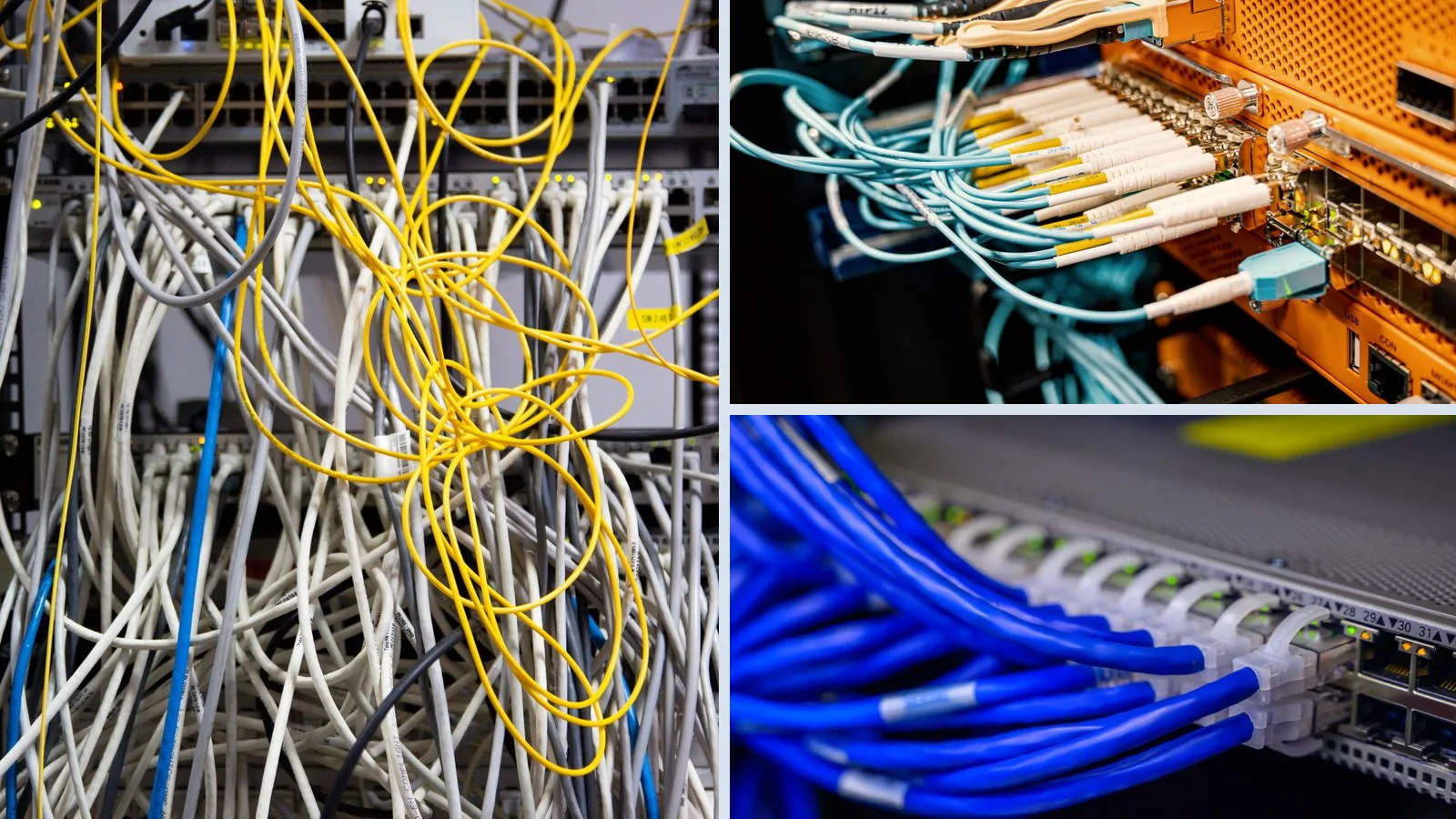
A physical analogy for stabilization: moving from tangled dependencies toward connections that can be identified, maintained, and changed with less uncertainty.
A stabilized application does not need to be technically perfect. It does need a credible operating boundary, understood residual risks, and a path for continued change that does not depend on hidden knowledge or uncontrolled manual work.
A useful measure of stabilization is whether the same incidents, manual fixes, emergency releases, and support escalations continue to consume operating capacity. If unplanned work remains high, planned improvement will remain difficult even when the immediate failure has been resolved.
Apparent stability can be misleading. An application that has not changed or failed recently may simply be avoiding the conditions that expose its deployment, capacity, dependency, or recovery weaknesses.
Modernize When Valuable Behavior Can Be Preserved
Modernization is appropriate when the application still contains valuable business behavior, data, workflows, or integrations, but one or more parts of the system prevent safe operation or continued delivery.
The safest modernization plans usually isolate a boundary that can be changed and verified. Examples include replacing an unsupported runtime, separating reporting from the production database, introducing an API around fragile business logic, moving deployment into a repeatable pipeline, replacing an unreliable integration, or extracting one constrained subsystem.
Phased modernization is not automatically safer than replacement. It works only when the existing system can tolerate incremental change and when temporary coexistence between old and new components can be operated, observed, reconciled, and recovered.
Replace, Contain, or Retire When Continued Repair Deepens the Risk
Replacement becomes more responsible when critical behavior cannot be verified, the architecture prevents safe change, foundational dependencies are unsupported, security and recovery cannot be brought within an acceptable boundary, or the cost of preserving the system exceeds the value of its unique behavior.
Replacement does not always mean an immediate custom rebuild. A standard product, changed business process, integration platform, or smaller purpose-built application may meet the actual requirement with less operating burden.
Containment may be required while replacement proceeds. That can include limiting changes, reducing exposure, improving backup and monitoring, isolating access, documenting manual fallback, or keeping the application available only for a defined transition period. Retirement is appropriate when the dependency can be removed and retained data can be handled safely.
Past investment explains how the system arrived at its current state. It does not establish that further investment is the responsible path.
What the Decision Should Make Clear
A useful recommendation makes the selected path, the evidence supporting it, the important unknowns, the business dependency being protected, the immediate actions, and the conditions for reconsidering the decision clear to everyone responsible for approving or carrying it out.
It should also show who can approve changes, who controls access and environments, how incidents and recovery are handled, which providers remain involved, and where accountability begins and ends. Without those decisions, even a technically sound remediation plan can return to fragmented ownership.
The most useful outcome is not a larger backlog. It is a credible destination and a controlled next increment.
References
- Microsoft: Assess Your Application Modernization Needs
- Microsoft Cloud Adoption Framework: Plan Your Cloud Modernization
- NIST SP 800-34 Rev. 1: Contingency Planning Guide for Federal Information Systems
Frequently Asked Questions
How Do You Determine Whether an Application Should Be Stabilized or Replaced?
The decision begins with the application's business importance, technical condition, data, dependencies, operating risk, expected lifespan, and cost of continued remediation. The initial assessment determines whether focused stabilization is practical or whether modernization, phased replacement, containment, migration, or retirement is the more responsible path.
Can You Transition a System With Little or No Documentation?
The feasibility depends on the evidence that can be recovered and verified. Arxima begins with the available code, infrastructure, configuration, delivery process, data, logs, external services, access, and stakeholder knowledge. Some dependencies or behaviors may remain uncertain, and the engineering plan reflects those limits.
Can Arxima Operate the Application After Stabilization?
Yes, when the application can be brought into a supportable operating scope. Ongoing operation begins after the system is sufficiently understood, material risks are addressed or explicitly planned for, responsibilities are defined, and Arxima has the access and authority required to manage the agreed scope.
Can You Transition a System Built by Another Developer or Vendor?
A previous developer or provider may participate in a controlled handoff when useful, but the long-term model does not depend on Arxima supervising an unrelated development team indefinitely. Managed responsibility requires clear control over the systems, standards, access, and delivery processes within scope.
What If Source Code, Credentials, or Technical Assets Are Incomplete?
The feasibility depends on what can be recovered and verified. Missing source, inaccessible accounts, unknown credentials, absent build artifacts, or vendor restrictions may limit stabilization and may require replacement, containment, migration, or a revised operating scope.
What Happens If the System Cannot Be Made Supportable?
The recommendation may be to isolate high-risk components, limit change, replace selected parts, build a replacement path, migrate data, or retire the system. A credible transition plan does not require preserving every inherited component.