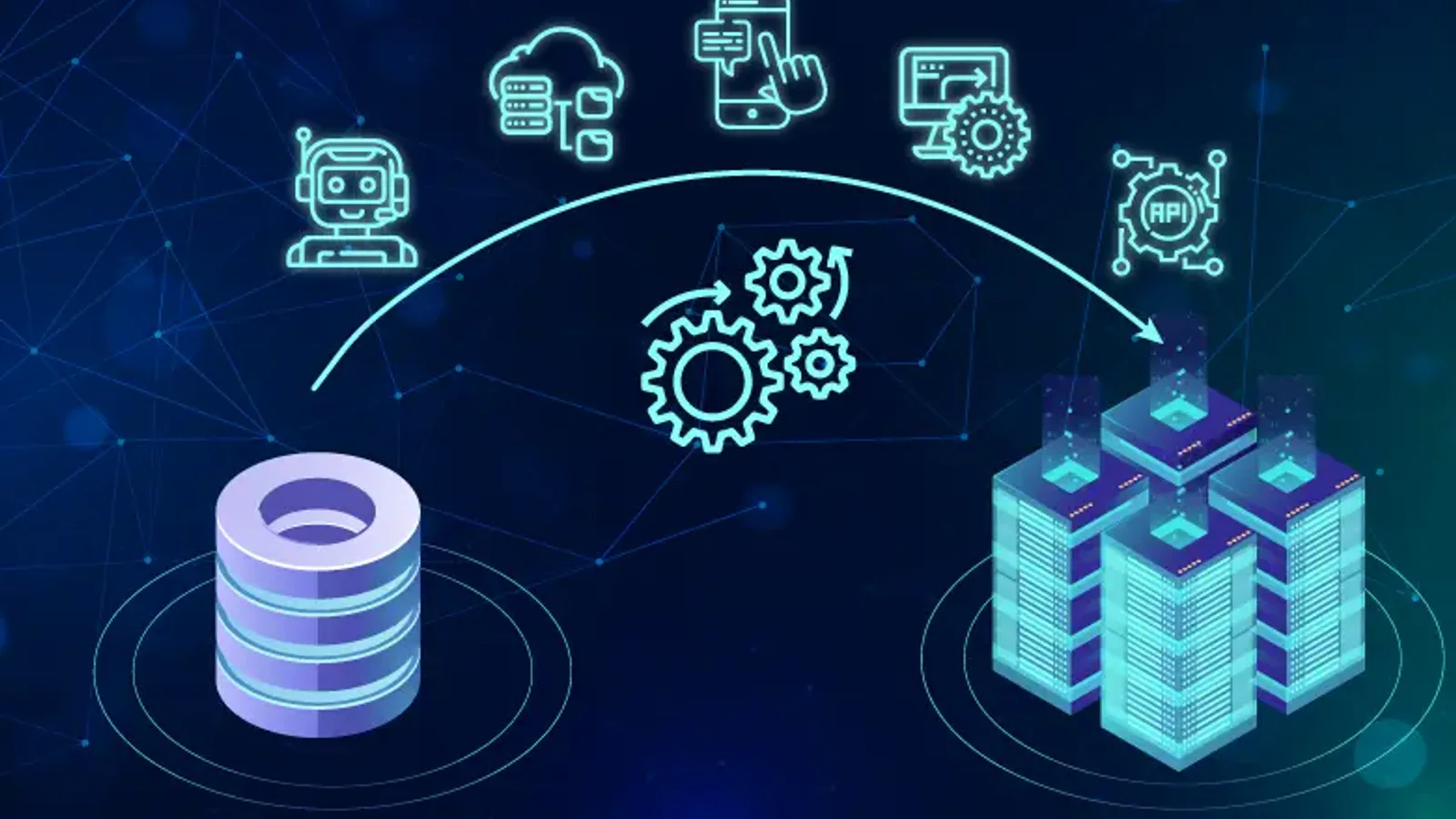
Data and Integration Engineering

Data Platforms and Integration

Databases, Integrations, Data Pipelines, Messaging, and Reporting

Technical Responsibility

Dependable Data Platforms, Integrations, and Reporting

Engineer and operate the databases, data movement, transformations, messaging, reporting, and recovery that allow applications and business processes to depend on shared information.

When This Helps

Data engineering becomes critical when applications, integrations, reporting, and daily operations depend on the same information moving reliably.

Data Is Spread Across Tools, Vendors, and Manual Processes

Spreadsheets, scheduled exports, vendor connectors, custom scripts, ETL tools, BI refresh jobs, direct database access, and manual re-entry have accumulated without a clear operating picture or dependable ownership.

Reporting and Analytics Are Constrained by Operational Systems

Complex reporting runs against production databases, teams calculate the same metrics differently, historical analysis is difficult, or a spreadsheet and third-party reporting layer have outgrown their role.

Integrations Fail Silently or Create Conflicting Records

Data becomes stale, duplicated, delayed, or inconsistent across applications, and failures between APIs, queues, files, vendors, and databases do not have clear monitoring, reconciliation, or ownership.

Data Architecture

Architecture Follows the Data Workload

Reliable data operation depends on more than moving records between two endpoints. Databases, integration patterns, transformations, reconciliation, reporting, observability, backup, and recovery must fit the way the information is created and used.

Databases for the Workload

Relational, document, row-oriented, column-oriented, warehouse, and reporting-store patterns are selected according to transaction, integrity, access, scale, history, and analytical requirements.

Integration and Data Movement

APIs, webhooks, queues, events, files, ETL, ELT, change data capture, and scheduled workflows are chosen around timing, volume, coupling, failure behavior, replay, and recovery.

Operational and Analytical Systems

Transactional systems remain focused on daily operation while reporting stores, replicas, warehouses, and analytical databases support history, aggregation, shared metrics, and business intelligence.

Connected Data Scope

What the Responsibility Covers

Data engineering remains connected to the applications, infrastructure, workflows, reporting, and recovery requirements that depend on it.

  • Database architecture, performance, and operational management
  • Application APIs and systems integration
  • Messaging, queues, and asynchronous data movement
  • Data workflows, transformation, and automation
  • Data warehousing and reporting foundations
  • Operational dashboards and business intelligence
  • Data quality, lineage, monitoring, and failure handling
  • Backup, recovery, retention, and capacity planning

How the Work Moves

  1. 01

    Map Sources and Business Use

    Identify systems of record, data owners, workflows, consumers, dependencies, operating constraints, and the decisions or processes the data must support.

  2. 02

    Design the Data Foundation

    Define integration boundaries, databases, messaging, transformation, storage, access, observability, and recovery around the business requirement.

  3. 03

    Build and Validate the Flow

    Implement integrations and automation with visible failure handling, controlled releases, and validation against real operating data and workflows.

  4. 04

    Operate and Improve

    Monitor performance, data movement, failures, capacity, and changing application dependencies so the platform remains useful as the business changes.

Managed Outcome

Data Flows That Remain Dependable in Operation

Databases, integrations, transformation, reporting, observability, backup, and recovery remain connected to the workflows and decisions that depend on the information.

Dependable Data Movement

Validation, retries, replay, reconciliation, monitoring, error handling, and recovery are designed around the operating behavior required when a dependency is delayed or unavailable.

Information Ready for Use

Operational systems, reporting stores, replicas, warehouses, and analytical databases are separated where necessary so daily work and decision-making do not compete for the same data path.

Managed Data Operations

Database maintenance, pipeline failures, schema and integration changes, performance, capacity, access, backup, recovery, and planned improvement remain under defined ownership.

Service Details

Frequently Asked Questions

How Do You Choose Between SQL, NoSQL, and Analytical Databases?

The decision is based on data relationships, integrity requirements, transaction behavior, query patterns, schema evolution, scale, distribution, reporting needs, and operating maturity. Relational databases are often the strongest default for structured business systems.

Document, column-oriented, and other specialized models are used when their workload advantages justify the tradeoffs.

When Should Reporting Be Separated From the Production Database?

Limited, controlled reporting may run against an operational database.

As query complexity, data volume, history, or user demand grows, a reporting store, replica, warehouse, or analytical database can protect the production workload and provide a more stable model for business intelligence.

How Do You Select Between an API, Queue, Event, File, or Batch Integration?

The pattern follows timing, volume, coupling, reliability, ownership, replay, recoverability, source limitations, and the consequences of delay or duplication.

Direct APIs are appropriate for some synchronous interactions; queues, events, files, change data capture, or scheduled workflows are stronger for other operating conditions.

Can Arxima Consolidate Data Spread Across Several ETL Tools and Vendors?

Yes. Arxima can map the current data flows, identify duplicated or conflicting pipelines, evaluate the role of each tool, and design a simpler operating model.

Consolidation does not require replacing every platform; it means reducing unnecessary overlap and clarifying transformations, monitoring, recovery, and ownership.

How Are Reliable Integrations Designed When a Vendor System Is Outside Arxima's Control?

Arxima designs around the limits of each dependency using validation, retries, idempotent processing where practical, reconciliation, monitoring, and recovery.

External APIs, vendor changes, rate limits, and source-data quality affect the reliability that can be achieved, so those constraints are made visible rather than hidden.

Can Arxima Transition an Undocumented Data Pipeline Into Managed Operation?

That depends on the condition of the pipeline and the evidence available. Arxima begins with a bounded technical assessment of the code, schedules, data stores, credentials, transformations, dependencies, logs, failure behavior, and expected business result.

The assessment determines whether the pipeline can transition into managed operation or requires remediation or replacement first.

Can Arxima Support Data Migration and Reconciliation During System Replacement?

Yes. Work can include source profiling, mapping, cleanup, transformation, validation, rehearsal, cutover, rollback, historical retention, and reconciliation across the applications and business processes that depend on the data.

Does Arxima Operate Data Workflows After Implementation?

Yes. Managed data operations can include database operations, pipeline monitoring, error handling, reconciliation, schema and integration changes, backup, recovery, performance, capacity, access, and planned improvement.

Data and Integration

Discuss a Data Flow, Reporting Problem, or Integration Responsibility

Start with the systems involved, the information the business depends on, and where the current process becomes manual, inconsistent, slow, or unreliable.

Schedule a Review